₹4,500 Cr Naval mining opportunities and explosives expansion can boost growth?
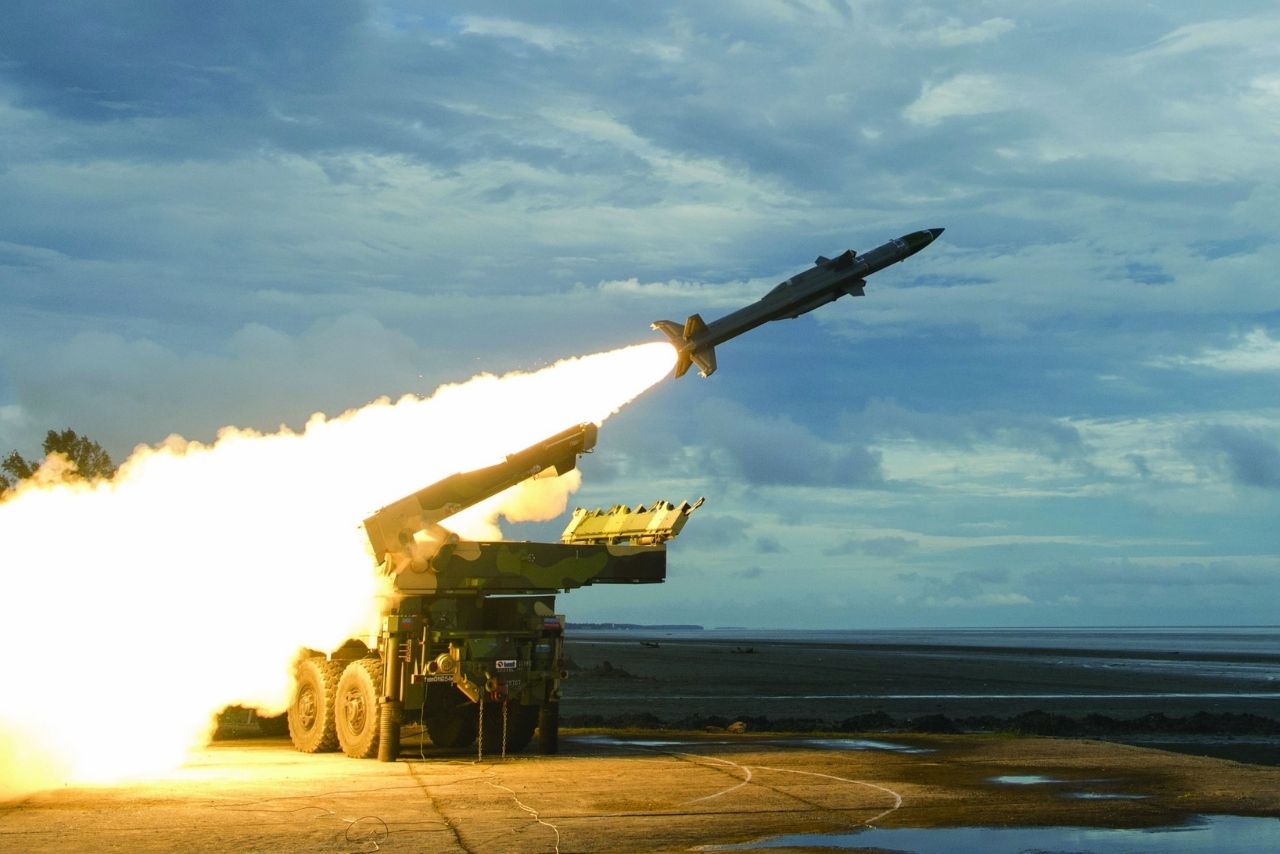
Overview: Apollo Micro Systems is emerging as a strong indigenous defense company with opportunities across naval mines, explosives, missile systems and defense electronics. With record FY26 growth, Rs 4,000-Rs 4,500 crore naval mines opportunity, IDL Explosives expansion and strong R&D investments, Apollo aims to evolve into a diversified defense platform OEM.
Structural changes are underway in India’s defense manufacturing environment, driven by aggressive policy changes towards defense manufacturing and indigenization for export and domestic use. In this environment, Apollo Microsystems has established itself as one of the fastest-growing defense technology companies, with expertise ranging from missiles, underwater systems, and electronic warfare to avionics and advanced weapons platforms.

FY26 will be our most successful year yet. Apollo MicrosystemsWith record revenues, improved profitability, enhanced platform capabilities and forays into explosives and naval systems. According to executives, Apollo is moving toward evolving into a defense systems and weapons platform company rather than just a subsystems supplier. Apollo’s Vision 2036 roadmap includes establishing itself as a diversified revenue-generating OEM player across land, air and maritime defense solutions, with a domestic and export focus.
The underwater naval mines and explosives business represents a huge opportunity for Apollo. According to Apollo, the available market size in terms of different variants of naval mines in the next few years could reach 4,000-4,500 cr. Additionally, IDL conversion, greater involvement in missile systems, and export ambitions could lead to a multi-year growth trajectory for Apollo.

With a market capitalization of Rs 14,900 crore, shares of Apollo Micro Systems Ltd are trading at Rs 417 and at a PE of 132 compared to industry PE of 67. The stock has returned more than 3,600% over the past five years.
FY26 performance reflects strong execution.
FY26 saw the best results ever achieved by Apollo Micro Systems. Over the past five years, the company has reported a revenue CAGR of 30%, an EBITDA CAGR of 41%, and a PAT CAGR of 64%.

Revenues in FY26 grew by 61%, reaching INR904crores from INR562crores in FY25. Excluding other income, EBITDA increased 69% to INR218 crores, while PAT increased 91% to INR107 crores. EBITDA margin was 24% and PAT margin was 12%.
Additionally, the company has improved operational efficiency. ROCE improved from 10% in FY21 to 18% in FY26. The working capital cycle has also been optimized to shorten from 626 days to 359 days.
The fourth quarter of FY26 performance also reflected strong numbers, with revenue growth of 81% to INR293 crores. EBITDA increased 88% to INR 68 million and PAT increased 164% to INR 37 million. Apollo’s order volume at the end of FY26 was INR 1,432 crores.

According to management, in addition to revenue growth, FY26 saw Apollo build capabilities in a number of ways, including through acquisitions, explosives, R&D, and platform-level expansion.
Vision 2036 signals a shift towards platform ownership
The roadmap presented by management, “Vision 2036,” represents Apollo’s journey from being a Tier 1 electronic subsystem manufacturer to becoming a well-known OEM.
The roadmap is built on the company’s four cornerstones: First, Apollo aspires to be a global OEM brand based in India rather than just a subsystem manufacturer. Second, we strive to ensure that the company does not become profit-driven for any particular customer or defense program.
Thirdly, the company seeks to strengthen its presence in India and expand it internationally through defense procurement. The fourth cornerstone includes significant investments in new-age technologies such as RF systems, artificial intelligence, autonomous systems, and inertial navigation technologies.
Management emphasized that the company has evolved into a comprehensive weapons systems manufacturer that continues to develop IP and platform-based technologies. This is important as the Indian defense ecosystem offers ample potential for Indian private enterprises in the areas of missiles, naval systems, ammunition and advanced technologies.
Naval mines can be a major opportunity
The first opportunity management highlighted during the earnings call discussion was the growing importance of Apollo’s activities within underwater naval mining systems. It was noted that various types of naval mines create a potential market worth around INR4,000 crores to INR4,500 crores.
Currently, Apollo is the production partner for DRDO’s multi-impact mine program. We also plan to become a DCPP partner for other types of naval mines. The company also said participation will include shallow-water mines, deep-sea mines, limpet mines and diver-borne mines.
Management also noted that some orders related to the above opportunities may begin to be received even during FY27, while others may take more time over the next few years. This opportunity is particularly important in the context of India’s focus on indigenizing underwater warfare systems.
Apollo’s knowledge base in torpedoes, underwater systems, sonar systems and navigation is technologically well equipped to meet these requirements. Finally, the company said it has begun seeking export orders for its underwater mining system.
Expansion of IDL explosives opens up new markets
Apollo’s acquisition of IDL Explosives and subsequent growth could also serve as an additional catalyst for growth. The company noted that explosives production is strategically important and commercially viable as it expands its product line to include ammunition, artillery, aerial bombs and weapon systems.
In FY26, the company secured an industrial license for TNT and RDX manufacturing from IDL Explosives and noted that much larger plans are being considered to expand its defense explosives manufacturing facility.
Apollo specified that the TNT and HMX manufacturing facilities currently mentioned primarily refer to industrial explosives rather than defense explosives manufacturing capabilities, which may come later depending on visibility.
Management believes that market conditions for the explosives industry remain favorable as geopolitical tensions have reduced global ammunition stocks and ESG considerations have led to a decline in explosives manufacturing capacity in some countries due to lack of investment.
We also confirmed that we are aggressively pursuing ammunition and artillery business opportunities, including including charged shells rather than empty shells.
Currently, IDL is in a transition phase. Traditionally, IDL has incurred operating losses, but management emphasized that operating losses have already been reduced significantly and further reductions are expected in future quarters.
Expanding Opportunities with Missile Programs and Advanced Technologies
Apollo continues to strengthen its involvement in India’s missile and air defense environment. According to executives, Apollo is represented across almost all missile systems developed indigenously by Indian manufacturers.
Apollo is currently focusing on RF seeker development and is establishing an RF seeker test laboratory within its Hardware Park unit in the future. Apollo also shared that the company is involved in strategic missile projects such as QRSAM and Kusha with systems such as SAM Operation System and others.
In addition to missile systems, Apollo has branched out into unmanned systems, loitering munitions, counter-drone systems, and RF technology-based products. Executives noted that Apollo is working to develop RF tracking systems, electronic warfare sensors, direction finding systems and communications systems.
Apollo has also been embedding artificial intelligence capabilities into its products in autonomous vehicles, underwater platforms, battlefields, and sensor fusion systems. Apollo has also made good progress on a fiber-optic gyroscope-based inertial navigation system, which it plans to launch soon.
Strengthening long-term positioning through R&D investment
Apollo continues to strengthen its involvement in India’s missile and air defense environment. According to executives, Apollo is represented across almost all missile systems developed indigenously by Indian manufacturers.
Apollo is currently focusing on RF seeker development and is establishing an RF seeker test laboratory within its Hardware Park unit in the future. Apollo also shared that the company is involved in strategic missile projects such as QRSAM and Kusha with systems such as SAM Operation System and others.
In addition to missile systems, Apollo has branched out into unmanned systems, loitering munitions, anti-drone systems, and RF technology-based products. Executives noted that Apollo is working to develop RF tracking systems, electronic warfare sensors, direction finding systems and communications systems.
Apollo has also been embedding artificial intelligence capabilities into its products in autonomous vehicles, underwater platforms, battlefields, and sensor fusion systems. Apollo has also made good progress on a fiber-optic gyroscope-based inertial navigation system, which it plans to launch soon.
Can Naval Mines and Explosives Maintain Its Growth Momentum?
Apollo’s near-term growth prospects will largely depend on the expansion of its high-value platforms for naval, explosives and weapons capabilities. Management is very optimistic about continuing growth at a similar or higher rate as larger dollar orders begin to come in.
Apollo expects a surge in orders for underwater mines, explosives, ammunition, air defense and indigenously developed weapons systems in FY27 and beyond. Management also believes that there may be delays in order approvals and orders in the current fiscal year.
But turning into an overall defensive platform player also comes with execution risk. Downsizing of explosives manufacturing, integration of IDLs, export of products and commercialization of various R&D efforts require sound execution and management of capital.
But despite the execution risks, Apollo appears well placed against a structurally conducive backdrop. Rising defense budgets, increased domestic procurement, geopolitical demand for ammunition and the growing role of the private sector in the defense sector will create tremendous opportunities for domestic defense companies.
By properly executing the naval mines program, scaling up explosives manufacturing, and translating its diverse technology portfolio into production orders, Apollo can become a diverse indigenous defense technology player of the future.
Disclaimer: The views and investment tips expressed by the investment experts/brokers/rating agencies of tradebrains.in are their own and not the views and investment tips of the website or its management. Investing in stocks carries the risk of financial loss. Therefore, investors must exercise appropriate caution while investing or trading in stocks. Neither Trade Brains Technologies Private Limited nor the author shall be liable for any loss suffered as a result of any decision taken based on this article. Consult an investment advisor before investing.