Choosing a New Crypto Hardware Wallet in 2026: Avoid These Common Mistakes
What you need to know about choosing the best cold wallet for your cryptocurrency security this year
cautionary tale
In October 2025, an American man woke up to discover that 1.2 million XRP (worth more than $3.05 million at the time) had been stolen from his ‘cold wallet’. His entire retirement…
“Over $3 million worth of XRP was just stolen from my cold wallet.”
https://medium.com/media/9e3c3a3f06433e28a0e2763040d8b632/href
In fact, it was not a cold wallet, but a hot wallet connected to the internet.
His experience and the reaction to his viral video highlighted a serious problem in the cryptocurrency security industry.
https://medium.com/media/427626fefd0451073a2d16ab13076597/href
“One lesson our industry needs to do better is not to confuse the products when we offer both managed and non-custodial products.”
He thought he was doing everything right.
This story and others like it show that changes are needed in cryptocurrency security going forward. Because the comments on these social posts show that many people are still stuck with companies they ‘trust’, just like they trusted exchanges before the first hardware wallet (Trezor Model One) was created…
“I’ve always wondered this. Most of these wallets are made in small countries with few laws. Let’s say they go bankrupt and decide to take everything from everyone.”
“It’s a theory going around from companies that don’t show their full code. There might be a backdoor built into the coding. Hypothetically, anyone who owns a wallet company could take out millions or billions of dollars in funds and disappear. Without cryptocurrency regulation, no country internationally would track them.”
Less transparency leads to more speculation, even if it is not true..
If you want to keep your cryptocurrency safe in the future, necessary Be distrustful, suspicious and meticulous in your studies.
Following one influencer’s advice isn’t enough.
Trusting a few reviews won’t solve your problem.
The trend this year is clear… 2026 will be the year when users demand trustless security. If you are serious about protecting your digital assets, this should be considered non-negotiable.
But what should you look for?
If you’re new, how would you know what’s good and what’s bad?
This is a solid starting point.
5 signs your hardware wallet isn’t as secure as you think
1. It is not open source…

Here are the reasons why Satoshi made Bitcoin open source:
“Open source means anyone can independently review the code. If it’s closed source, no one can check its security. I think it’s essential for a program of this nature to be open source.”— Satoshi Nakamoto
No hidden proprietary parts “For your safety” . There is no mystery or surprise.
Banks, exchanges, even Some hardware wallets keep you guessing what’s going on behind the scenes.
In the world of cryptocurrency security, this is unacceptable..
We are not here to reinvent existing systems.
If you decide to ‘trust’ a hardware wallet that is not completely open source, there will always be fear in the back of your mind. could do It happens one day.
At Trezor we take the same approach as Satoshi.
One Reddit user said:
“You can literally build an entire Trezor device yourself. The files for the 3D printable case are on Trezor’s github, along with a schematic of the circuit board and all the little electrical parts you need to build your own.”
We made the design open source for one reason: So you don’t have to blindly trust us. So you have full control of your assets.
2. There is no screen
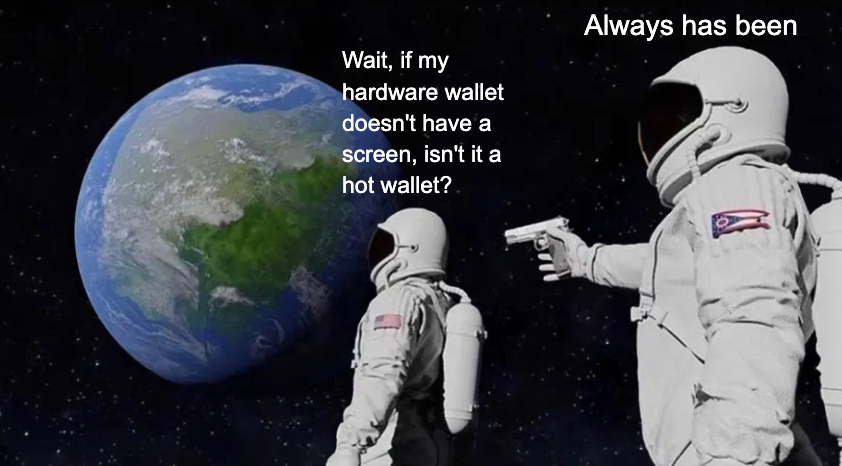
Self-custody security is a difficult balance between usability, security, and privacy.
Screenless hardware wallets lean heavily toward usability at the expense of security…
- You can’t see exactly what you signed. — If you can’t verify the actual address on your hardware device, you’re trusting the screen on your phone or computer. And what if your phone is infected with malware? 💀
- Creating a wallet backup (seed phrase) cannot be considered completely secure and offline. — If the generated word appears on your phone screen, you technically have a “hot” wallet (exposed to the internet). There’s a reason why hardware wallets with screens say the word offline. absolutenessTouch the online digital environment.
And these are just a few of the risks you may be unknowingly exposed to. ifChoose a hardware wallet without a screen.
3. It is not a true cold wallet
If you’re in the market for a hardware wallet, this might seem obvious. The main point of investing in a device is to keep your keys safe offline in a cold wallet with no internet connection… If you look at the above or the original story about screenless hardware wallets, many people are unknowingly protecting their cryptocurrencies with hot wallets.
Are keys generated offline?
Does your hardware wallet display these words on devices connected to the internet?
These are both red flags, so you should take the time to check them out before investing in a hardware wallet.
4. No NDAs or use of auditable secure element chips.
In 2019, we tested commonly used Secure Element chips and found three things:
• Third-party authentication has little value in terms of security.
• They were often overly complex (the enemy of security) and easy to exploit. We did this very quickly in our testing.
• Discovered vulnerabilities cannot be shared publicly (this is against our ethos).
And is it worse yet? We have been publicly criticized by competitors who use the same chips.
It was essentially a placebo. Users were completely unaware of the vulnerability and we were legally unable to notify anyone about it.
We decided that using the NDA-free Secure Element chip was non-controversial and eventually implemented the auditable TROPIC01 chip into the Trezor Safe 7.
Why this radical transparency is important…
These tamper-evident chips protect your device’s secret (PIN), protecting it from physical attacks.
The only information I’ve heard about the device’s secure element chip is this: “Highest level of security…” If you don’t have any evidence except some certifications (which we already know are of little value), that’s a red flag.
we suddenly again “Trust me bro” security.
5. The company is short of money. “Proof of Work”
Trustlessness is essential, but that doesn’t mean it denigrates reputation and history.
Who is behind the company that makes hardware wallets?
How long have they been around?
What are their goals and missions?
What is their history?
… Who determines their direction?
Are they 100% independently owned? *cough*safe *cough* … Or is it a collection of VC (venture capital) holdings?
After all, this is a long-term investment. You don’t want to buy a hardware wallet from a company that only a few years later becomes increasingly opposed to its original mission.
What about Treasure?
We’ve been on the same mission since we built the world’s first hardware wallet.
Empower individuals to self-manage their Bitcoin and cryptocurrencies with tools that perfectly balance security, privacy, and usability.
And we’re still innovating 12 years later.
One of our goals for 2026 is to make it easier than ever for you to transition to a trustless hardware wallet. Here’s what you need to know about making the switch to Trezor.
Jump to our Trezor guide (what you need to know)
Switching to new hardware can seem like a daunting task. Especially if you are a long-term HODLer.
Here are some important steps to take to make the transition safely:
- Choose the right device to meet your needs (all models are available for Universal crypto or Bitcoin only)
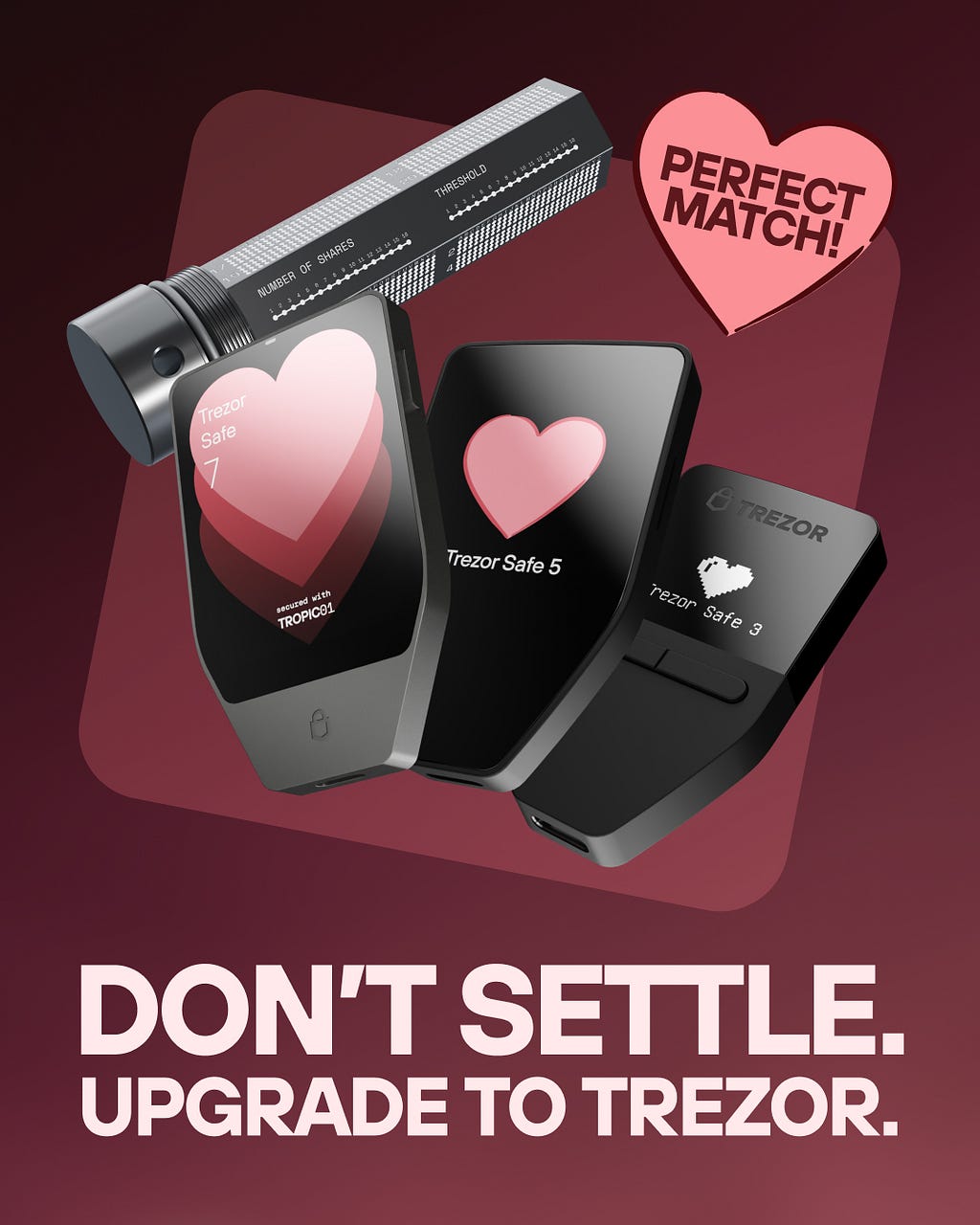
- Here’s a quick overview of Trezor Safe Family:
Trezor Safe 7 — Future-proof security with wireless freedom
Trezor Safe 5 — Touchscreen convenience for everyday use
Trezor Safe 3 — Simple security with all the essentials
- Create a new wallet — Moving to a potentially insecure wallet defeats its intended purpose.
- Always practice deleting and recovering your wallet before transferring funds. After testing, start with a small amount.
- Move your cryptocurrency to a new wallet (taking UTXO impact into account)
To make your migration as easy and safe as possible, schedule an onboarding session with one of our Trezor experts (1:1 live sessions for step-by-step support).
“This was my first time setting up a hardware wallet. Shawn was a pleasure to work with in setting up my Trezor wallet. He was very helpful in making sure I understood the basics of securing assets on the platform, including protecting against fraud. I highly recommend anyone looking to take ownership of digital assets to purchase a Trezor wallet and undergo an expert onboarding session.” —Verified Reviewer
Learn more about migrating to Trezor.
Is your current wallet sending up red flags?
Now it’s time to make a clean break. This Valentine’s Day, switch to a partner that’s fully open source, transparent, and ready to commit. For a limited time, get up to 20% off on bundles and launchers.
Switching to Trezor, General FAQs
- What makes it safe Is it different from other hardware wallets?
– Trezor built the first hardware wallet (over 12 years ago).
– Completely open source and independently owned from day one.
– We built the first quantum-enabled wallet with an auditable secure element chip.
– The Bitcoin-only model can be used with the universal model (there is no difference in security).
- Is it safe to migrate the same cryptocurrency wallet to an existing hardware wallet?
Although you can safely transfer the same wallet, we recommend creating a new wallet, testing recovery, and gradually transferring funds to the new address.
Reusing wallet backups that may be outdated or corrupted defeats the purpose of upgrading your security.
- Why is open source so important to cryptocurrency security?
Open source software allows anyone to independently verify how the device operates and is built, including how keys are generated, stored, and protected.
- What is it? “cold”Hardware wallet?
A true cold wallet creates and stores your private keys completely offline, without exposing them to any internet-connected device.
— Henry Windle,Senior Content Marketer, Trezor
Choosing a New Crypto Hardware Wallet in 2026: Avoid These Common Mistakes This article was originally published on the Trezor Blog on Medium, where people are continuing the conversation by highlighting and responding to this story.