Why Wealthy Americans Are Increasing Their Exposure to Greek Real Estate
Greek real estate is receiving more interest from wealthy Americans, and recent data reflects this trend. According to Greek daily eKathimerini, real estate investments by Americans through the Golden Visa program increased by 30% in the fourth quarter of 2025 compared to the same period last year.
This means wider change. American high net worth investors are looking to Greece for oceanside homes, European diversification, family flexibility and long-term residence plans.
Why Greece is More Attractive to U.S. Investors
European Exposure: Many wealthy Americans keep most of their assets in the United States. Their primary home, business interests, securities, retirement structures and bank accounts are often tied to one country and one currency. Greek real estate offers a way to add European physical assets to a broader portfolio.
Relative value: Greece appears more accessible than some of the more mature real estate markets in Western Europe. Luxury homes in London, Paris, the French Riviera or Switzerland often require much higher budgets. Greece offers ocean views, access to cities, strong tourism, and Mediterranean lifestyle values at prices that can still feel competitive to American high-net-worth buyers.
Market Recovery: Athens has changed significantly over the past decade. The city now has stronger hospitality, better-serviced apartments, upgraded neighborhoods, private healthcare options and more international attention. For investors who previously viewed Greece primarily as a holiday destination, the market is now more mature and easier to understand.
Rental Income Potential: The Greek tourism market supports demand for short-term rentals in popular areas, especially during the peak season. For investors who prefer stability, a long-term lease may be better suited. Reduce vacancy risk, simplify management, and generate more predictable revenue.
Rental income is by no means automatic, but tourism provides investors with a clear demand driver that they can factor into their calculations.
The Role of the Greece Golden Visa
The Greece Golden Visa is one of the reasons why Greek real estate stands out from the average overseas purchase. In many countries, purchasing a home abroad grants the investor ownership of the property but does not provide automatic permission for long-term residence. In Greece, a qualifying real estate investment of €250,000 can give non-EU investors the right to obtain a residence permit.
For high net worth households, residency status may support a broader range of plans. Families may want to spend more time in Europe, support their children’s education plans, retire later in the Mediterranean country, or have the option of creating a secondary base outside the United States. In this sense, residence becomes part of the family’s long-term flexibility.
Greece is also attractive because the Golden Visa does not require investors to relocate full-time. This is important for Americans who want choice rather than immediate migration. They can maintain their primary home, business, and tax life in the United States while adding a legal residency route to Greece.
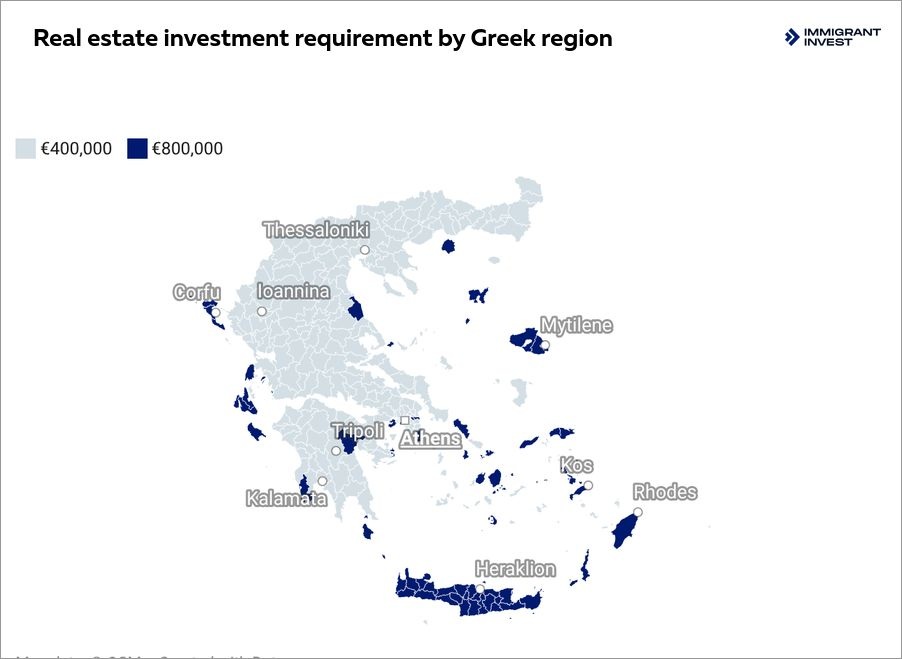
The investment required depends on the location of the property. The lower €250,000 threshold applies to properties purchased for refurbishment or conversion to residential use.
Why luxury real estate is attracting attention
Quality over entry price: In the Greek premium sector, purchase value depends more on asset quality than on reaching the minimum Golden Visa threshold. Location, liquidity, building condition, infrastructure and long-term usability are more important than the lowest possible cost of entry.
A well-located €1 million asset can be more powerful than a cheaper asset that is more difficult to maintain, use or sell.
Key areas: Athens’ southern coastal area is attracting attention for its combination of sea access and urban infrastructure. On the Athenian Riviera, residents have access to the capital, airports, restaurants, marinas and private healthcare without having to choose between city and coastal life. This gives the area a more practical appeal than isolated holiday properties.
scarcity factor: Premium assets are often dependent on scarcity. There is a limited selection of well-located homes with sea views, strong infrastructure and easy access to Athens. Scarcity does not guarantee profits, but it can help support demand for the best assets over time.
Asset Resilience: Luxury real estate can provide more value through long-term desirability than through short-term returns alone. In areas with enduring appeal, annual rental income is only one part of the valuation. Additionally, the asset must remain attractive throughout the market cycle.
Alternative Path: Funds and Deposits
Real estate can offer personal use and rental potential, but it also comes with operating costs and day-to-day responsibilities. For Americans who prefer a structure closer to a traditional portfolio plan, Greece also offers financial investment pathways.
Funding Path: The fund route begins with investing a minimum of €350,000 in a licensed mutual or alternative investment fund. The average annual return is typically around 4-5%. This option may be suitable for investors who wish to expose their Greek assets and residential pathways in one structure without having to select, maintain or manage specific apartments or villas.
Deposit path: The term deposit route usually requires a minimum of €500,000 in a Greek bank for at least one year with automatic renewal. It may be a good fit for investors who prioritize capital preservation and want a residential route without the operating decisions that come with direct property ownership.
These pathways demonstrate that Greece can suit a variety of investor profiles. Real estate is best suited to those who want European homes and qualified assets, while funds or savings are better suited to investors who prefer a passive structure. The best path will depend on your personal goals, risk tolerance, liquidity needs, and willingness to manage ownership yourself.
Outlook: Will US demand continue?
Program stability: U.S. demand will depend in part on whether Greece maintains a clear and predictable Golden Visa framework. Investors need to know which assets are eligible, what criteria apply, and how renewals work. The more stable the rules, the easier it will be for families to include Greece in their long-term plans.
Select asset: Demand also depends on the quality of available real estate. If prices rise too quickly in popular areas, investors will need to be more selective. Buyers should check ownership, taxes, building quality, rental rules, maintenance costs and resale prospects before signing a contract.
Premium segment: The luxury segment can still be attractive, as wealthy buyers often want assets they can use, enjoy and pass on. Greece is well placed for this as it offers strong lifestyle appeal along with a mature real estate market. The strongest demand is likely to be concentrated in locations with infrastructure, scarcity, and year-round availability.
Wider Investment Pathways: The next wave of demand may move beyond real estate. As more Americans learn about funds and savings, Greece could attract investors who want to plan to live there without buying real estate. This makes the Greek Golden Visa relevant to a broader group of HNWIs.
conclusion
The rise in U.S. investment in Greek real estate shows that wealthy Americans now see Greece as part of a broader wealth scheme. The best decision depends on careful asset selection, a clear understanding of Golden Visa regulations, and realistic plans for long-term ownership or exit.
To understand which Greece Golden Visa route suits your goals, contact Immigrant Invest for a personal consultation.