Best Cross-Chain Swap Platforms: Complete 2025 Guide
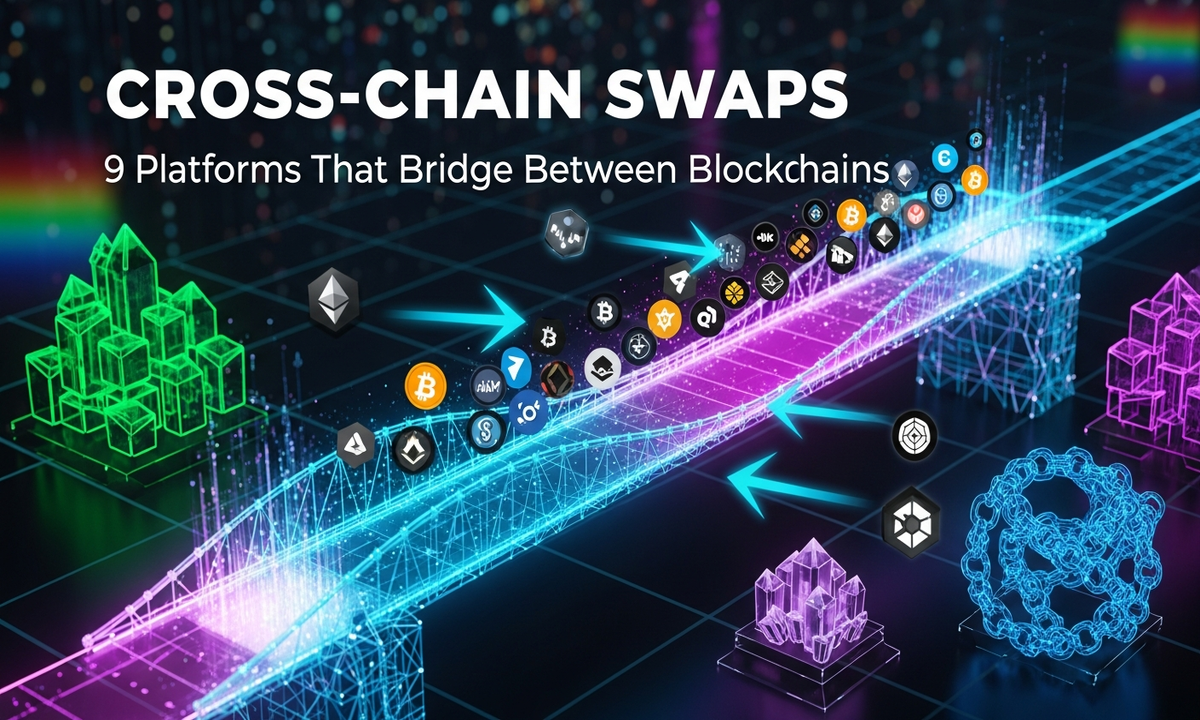
Cross-chain swaps enable seamless cryptocurrency exchanges across different blockchain networks without centralized intermediaries. As blockchain ecosystems expand, the ability to move assets between chains has become essential for traders, DeFi users, and investors seeking to maximize opportunities across multiple networks. This comprehensive guide explores the best platforms for cross-chain swaps, examining their features, security measures, and unique advantages in the rapidly evolving crypto landscape.
What Are Cross-Chain Swaps and Why They Matter
Cross-chain swaps allow users to exchange cryptocurrencies from one blockchain to another directly, eliminating the need for centralized exchanges or custodial services. This technology addresses one of crypto’s fundamental challenges: blockchain interoperability. Unlike traditional exchanges where you must deposit funds, create accounts, and complete identity verification, cross-chain swap platforms facilitate direct peer-to-peer or algorithmic exchanges between different blockchain networks.
The significance of cross-chain swaps crypto extends beyond mere convenience. These platforms empower users with true ownership of their assets throughout the exchange process, reduce counterparty risk, and enable access to opportunities across multiple ecosystems. Whether you’re moving between Ethereum and Binance Smart Chain, Bitcoin and Solana, or any other combination, cross-chain technology breaks down the barriers that have historically siloed blockchain networks.
Best Platforms for Cross-Chain Swaps in 2025
1. Godex – Fast, Anonymous Cross-Chain Exchange
Godex stands out as one of the fastest and most user-friendly cross-chain swap platforms available today. With support for over 300 cryptocurrencies and zero exchange limits, Godex delivers the seamless experience crypto users demand. The platform’s execution time ranges from just 5 to 30 minutes, making it one of the quickest options for cross-chain swaps in the market.
What sets Godex apart is its commitment to privacy and transparency. The platform operates without KYC requirements, meaning users can execute swaps without providing personal information or completing lengthy verification processes. This approach aligns perfectly with cryptocurrency’s core principles of financial sovereignty and privacy. Additionally, Godex deletes all order information after two weeks, ensuring your transaction history remains private.
The platform’s competitive advantage includes transparent exchange rates with zero hidden fees, providing users with exactly what they see upfront. Godex’s real-time rate tracking system monitors major platforms including Bitfinex, HitBTC, Binance, and numerous other partners to ensure users receive optimal exchange rates. New users benefit from a 0.005 BTC signup bonus, while every transaction earns up to 0.6% rewards, creating additional value for active traders.
With access to 928 tradable cryptocurrencies through its integrated ecosystem, Godex serves as a comprehensive solution for cross-chain swaps crypto needs. The platform’s straightforward interface removes complexity from the exchange process, allowing both beginners and experienced traders to execute swaps quickly and confidently. For users prioritizing speed, privacy, and competitive rates in their cross-chain transactions, Godex represents an excellent choice.
Key Features:
- ✓ No KYC required – completely anonymous swaps
- ✓ 300+ cryptocurrencies with 928 tradable assets
- ✓ Lightning-fast execution: 5-30 minutes
- ✓ 0.005 BTC signup bonus for new users
- ✓ Up to 0.6% rewards on every transaction
- ✓ Zero hidden fees with transparent pricing
- ✓ No exchange limits
- ✓ Automatic data deletion after 2 weeks
- ✓ Real-time rate optimization across major exchanges
2. THORChain – Decentralized Liquidity Protocol
THORChain operates as a fully decentralized liquidity protocol enabling native asset swaps across multiple blockchain networks without wrapped tokens or intermediaries. The platform’s unique architecture allows users to swap Bitcoin, Ethereum, and other major cryptocurrencies directly through its liquidity pools, maintaining true asset ownership throughout the process.
Built on the Cosmos SDK, THORChain utilizes a network of validator nodes to facilitate cross-chain swaps through continuous liquidity pools. Users contribute assets to these pools and earn yield from swap fees, creating a sustainable ecosystem where liquidity providers are incentivized to maintain deep markets. The platform’s native RUNE token serves as the settlement asset, bridging all swaps and maintaining network security.
THORChain’s security model includes Threshold Signature Schemes (TSS) and economic security guarantees that require validators to bond significant value before participating in network consensus. This design creates strong incentives for honest behavior while enabling truly decentralized cross-chain functionality.
Pros:
- ✓ Truly decentralized with no central authority
- ✓ Native asset swaps without wrapped tokens
- ✓ Yield opportunities for liquidity providers
- ✓ Strong economic security model
Cons:
- ✗ Higher complexity for beginners
- ✗ Past security incidents (though resolved)
- ✗ Requires understanding of liquidity pools
- ✗ Potential impermanent loss for LPs
3. Multichain – Extensive Network Coverage
Multichain has established itself as one of the most comprehensive cross-chain infrastructure platforms, supporting over 80 different blockchain networks and thousands of tokens. The platform’s router protocol enables seamless asset transfers across diverse ecosystems including Ethereum, BNB Chain, Polygon, Avalanche, Fantom, and many emerging networks.
The platform offers two primary services: cross-chain bridges for moving assets between networks and cross-chain routers for optimal swap routing across multiple chains. Multichain’s anyCall feature enables cross-chain smart contract interactions, expanding possibilities beyond simple token transfers to complex DeFi operations. This functionality makes Multichain particularly valuable for developers building cross-chain applications.
Multichain’s security model relies on a network of SMPC (Secure Multi-Party Computation) nodes that collectively manage cross-chain transactions without any single party controlling user funds. The platform has processed billions in transaction volume and earned trust within the DeFi community.
Pros:
- ✓ Widest network coverage (80+ chains)
- ✓ Cross-chain smart contract capabilities
- ✓ High transaction volume and liquidity
- ✓ Developer-friendly infrastructure
Cons:
- ✗ Complex fee structure across different chains
- ✗ Some centralization concerns with SMPC nodes
- ✗ Variable transaction times depending on networks
- ✗ Requires technical knowledge for advanced features
4. Synapse Protocol – Optimized Bridge Aggregator
Synapse Protocol combines bridge infrastructure with an automated market maker to provide optimized cross-chain swaps and transfers. The platform connects major EVM-compatible chains along with newer networks, offering users efficient routing and competitive rates for their cross-chain transactions.
The protocol’s approach uses native assets where possible and wrapped representations when necessary, with its own stablecoin pools providing liquidity across chains. Synapse’s Bridge Aggregator automatically selects the most efficient path for transfers, considering factors like cost, speed, and security. Users benefit from this optimization without needing to understand the technical complexities behind different bridging methods.
Synapse has differentiated itself through focus on user experience, offering a clean interface and reliable performance. The platform’s native SYN token incentivizes liquidity provision and governance participation, creating a community-driven ecosystem around cross-chain infrastructure.
Key Features:
- ✓ Automatic route optimization
- ✓ Clean, user-friendly interface
- ✓ Stablecoin-focused liquidity pools
- ✓ Regular security audits
- ✓ Governance through SYN token
- ✓ Support for major EVM chains
- ✓ Competitive transaction fees
- ✓ Fast execution times
5. Chainflip – Bitcoin-Native Cross-Chain AMM
Chainflip brings a unique approach to cross-chain swaps with its focus on native Bitcoin integration. Unlike most platforms that require wrapped BTC, Chainflip enables direct swaps from native Bitcoin to assets on other chains through its validator network and threshold signature scheme.
The platform operates as a decentralized automated market maker specifically designed for cross-chain functionality. Chainflip’s validator nodes run specialized software that monitors multiple blockchain networks simultaneously, executing swaps when conditions are met. This architecture allows seamless exchanges between fundamentally different blockchain architectures without compromising on decentralization.
Chainflip’s state chain coordinates all cross-chain activities, with validators required to stake FLIP tokens and provide collateral exceeding the value they secure. This economic model creates strong security guarantees while enabling efficient cross-chain liquidity.
Pros:
- ✓ Native Bitcoin support (no wrapped BTC)
- ✓ Decentralized validator network
- ✓ Strong economic security model
- ✓ Unique architecture for BTC integration
Cons:
- ✗ Limited network support compared to competitors
- ✗ Newer platform with less track record
- ✗ Lower liquidity on some pairs
- ✗ Complexity for non-technical users
6. Stargate Finance – LayerZero-Powered Transfers
Stargate Finance leverages LayerZero’s omnichain messaging protocol to enable fast, secure cross-chain asset transfers with unified liquidity pools. The platform represents a next-generation approach to bridging, addressing common issues like liquidity fragmentation and slow confirmation times that plague earlier solutions.
Built on LayerZero’s underlying infrastructure, Stargate provides instant guaranteed finality for cross-chain transactions through its Delta Algorithm. This innovation ensures users can trust their transactions will complete successfully without waiting for lengthy confirmation periods or facing failed transactions. The platform supports major stablecoins and assets across Ethereum, Arbitrum, Optimism, Polygon, Avalanche, BNB Chain, and other networks.
Stargate’s unified liquidity model means liquidity providers can contribute to single-sided pools rather than splitting liquidity across multiple chains. This approach creates deeper liquidity and better rates for users while simplifying the experience for liquidity providers.
Key Features:
- ✓ Instant guaranteed finality
- ✓ Unified liquidity pools across chains
- ✓ LayerZero omnichain technology
- ✓ Single-sided LP positions
- ✓ Major stablecoin support
- ✓ Deep liquidity across networks
- ✓ No failed transactions guarantee
- ✓ STG token governance and rewards
7. Wormhole – Enterprise-Grade Bridge Infrastructure
Wormhole operates as a generic message passing protocol enabling communication between different blockchain networks, with token bridging as one of its primary applications. The platform has established partnerships with major blockchain ecosystems and processes significant daily volume across its supported networks.
The protocol’s guardian network comprises 19 validators who observe activity across connected chains and sign messages confirming cross-chain transactions. These validators represent reputable entities from across the blockchain space, creating a distributed security model. Wormhole’s technology enables not just token transfers but also cross-chain data and NFT movement, making it valuable infrastructure for the broader multi-chain ecosystem.
Wormhole has recovered from past security incidents with improved architecture and ongoing audits. The platform continues expanding its network coverage and capabilities, recently adding support for additional blockchain ecosystems and enhancing its security model.
Pros:
- ✓ Enterprise-grade infrastructure
- ✓ Broad network coverage
- ✓ NFT and data bridging capabilities
- ✓ Strong validator network
Cons:
- ✗ Past major security breach
- ✗ Relatively higher fees
- ✗ Some centralization with guardian network
- ✗ Complex for casual users
8. Celer cBridge – Fast and Low-Cost Bridging
Celer cBridge emphasizes speed and cost efficiency in cross-chain transfers through its liquidity network model. The platform enables transfers to complete in seconds rather than minutes while maintaining competitive fees, making it attractive for users who prioritize transaction speed.
The protocol operates through a network of State Guardian Nodes that provide security guarantees for cross-chain transfers. Celer’s approach uses liquidity pools on each supported chain, with the protocol matching transfers between chains and settling periodically. This design enables the speed advantages users experience while maintaining security through economic incentives and cryptographic guarantees.
Celer has expanded beyond simple bridging to include cBridge 2.0 features that support cross-chain DeFi operations, NFT transfers, and more complex cross-chain messaging.
Pros:
- ✓ Extremely fast transactions (seconds)
- ✓ Low fees compared to competitors
- ✓ Excellent user interface
- ✓ Cross-chain DeFi and NFT support
Cons:
- ✗ Liquidity dependent on specific routes
- ✗ Less decentralized than some alternatives
- ✗ Smaller network coverage
- ✗ Occasional delays during high congestion
9. Rubic – Cross-Chain Aggregator Platform
Rubic positions itself as a comprehensive cross-chain aggregator that connects multiple bridge protocols and DEX aggregators to find optimal routes for user swaps. Rather than maintaining its own bridge infrastructure, Rubic queries available options across the ecosystem and presents users with the best available rates and routes.
The platform’s approach provides convenience for users who want to compare options without visiting multiple services. Rubic integrates with major bridges, DEXs, and liquidity sources, offering a one-stop solution for cross-chain swaps crypto needs. Users can execute complex multi-step swaps that might involve bridging assets, swapping on multiple DEXs, and arriving at their desired token—all through a single interface.
Rubic’s SDK and widget solutions also enable other platforms to integrate its cross-chain functionality, expanding the ecosystem’s reach. The platform continues adding new chains, bridges, and features while maintaining focus on user experience and competitive routing.
Key Features:
- ✓ Aggregates multiple bridges and DEXs
- ✓ Automatic best-route selection
- ✓ One-stop interface for complex swaps
- ✓ SDK for platform integration
- ✓ Wide range of supported assets
- ✓ Transparent route comparison
- ✓ Multi-step swap execution
- ✓ Competitive rate finding
How to Execute Cross-Chain Swaps: Simple Steps
Executing cross-chain swaps has become increasingly straightforward as platforms improve their user experience. The basic process typically involves these steps:
- Select your source and destination assets – Choose which cryptocurrency you want to swap and which blockchain network you want to receive on. Ensure the platform supports your desired pair.
- Enter swap details – Input the amount you want to exchange and verify the estimated amount you’ll receive, including any fees. Check that the exchange rate meets your expectations.
- Provide destination address – Enter your wallet address on the destination blockchain where you want to receive the swapped assets. Double-check this address, as blockchain transactions cannot be reversed.
- Initiate and confirm – Send your source assets to the provided deposit address or connect your wallet to authorize the transaction. Wait for confirmations on the source blockchain.
- Receive your assets – Once processing completes, your swapped assets will arrive at your destination address. Transaction times vary from minutes to hours depending on the platform and blockchains involved.
Most platforms for cross-chain swaps now offer similar workflows, though specific details vary. Some require wallet connections while others operate through simple deposit addresses. Always verify you’re using official platform URLs and start with smaller amounts when trying a new service.
Key Factors When Choosing Cross-Chain Swap Platforms
| Factor | Why It Matters | What to Look For |
|---|---|---|
| Security | Protects your assets during transfer | Audited smart contracts, proven track record, security incidents history |
| Speed | Reduces wait times for swaps | Average transaction completion times, network congestion handling |
| Cost | Affects overall profitability | Transparent fee structures, competitive rates, hidden costs |
| Asset Support | Determines available trading pairs | Number of supported chains and tokens, coverage of needed assets |
| Privacy | Protects personal information | KYC requirements, data retention policies, anonymity options |
| User Experience | Simplifies the swap process | Interface clarity, mobile support, customer service quality |
Common Questions About Cross-Chain Swaps
Q: Are cross-chain swaps safe? Cross-chain swaps carry inherent smart contract and bridge risks, but established platforms with strong security practices and audits significantly reduce these concerns. Always research platforms before using them and start with smaller amounts.
Q: How long do cross-chain swaps take? Completion times range from 5 minutes to several hours depending on the platform, blockchains involved, and network congestion. Platforms like Godex typically complete swaps within 5-30 minutes.
Q: Do I need KYC for cross-chain swaps? Requirements vary by platform. Decentralized and privacy-focused platforms like Godex operate without KYC, while some centralized services may require identity verification for larger amounts.
Q: What fees apply to cross-chain swaps? Fees typically include platform service fees, blockchain network fees (gas), and potential slippage. Total costs vary significantly between platforms, making comparison worthwhile for larger swaps.
Cross-Chain Swaps vs. Centralized Exchanges: Pros and Cons
Cross-Chain Swap Platforms:
- ✓ Maintain custody of your assets throughout the process
- ✓ Often no KYC requirements, preserving privacy
- ✓ Direct blockchain-to-blockchain transfers
- ✓ Access to DeFi opportunities across chains
- ✗ Potentially higher fees for smaller amounts
- ✗ Require basic understanding of wallets and addresses
- ✗ Limited customer support compared to centralized services
Centralized Exchanges:
- ✓ User-friendly interfaces with extensive support
- ✓ Often lower fees for high-volume traders
- ✓ Additional services like margin trading and lending
- ✓ Fiat on/off ramps available
- ✗ Mandatory KYC and personal data collection
- ✗ Custodial model creates counterparty risk
- ✗ Potential account restrictions or freezes
- ✗ Limited to exchange-supported assets
Conclusion
Cross-chain swaps have revolutionized cryptocurrency trading by enabling seamless movement between blockchain networks while maintaining user sovereignty. The platforms discussed represent diverse approaches to solving blockchain interoperability challenges, from Godex’s privacy-focused, fast exchange service to decentralized protocols like THORChain and infrastructure solutions like Wormhole.
When selecting among the best platforms for cross-chain swaps, consider your priorities regarding speed, privacy, supported assets, and user experience. Platforms like Godex excel for users valuing anonymity, transparent pricing, and quick execution, while protocol-level solutions offer deeper DeFi integration for advanced users.
As blockchain technology continues evolving, cross-chain swaps crypto functionality will only become more sophisticated and accessible. Whether you’re a casual trader, DeFi enthusiast, or institutional participant, understanding and utilizing these platforms effectively opens access to the full potential of the multi-chain cryptocurrency ecosystem. Always practice security best practices, verify platform legitimacy, and stay informed about developments in cross-chain technology to make the most informed decisions for your trading needs.
Cross-Chain Swaps: 9 Platforms That Bridge Between Blockchains