What quantum-enabled cryptocurrency security means and why it matters

Why preparing for quantum computing now is essential to keep cryptography, Bitcoin, and digital security strong in the future
This document is no longer the current version. Read our new blog here. https://trezor.io/blog/security/what-quantum-ready-crypto-security-means-and-why-it-matters
Ten years ago, this would have been called quantum security science fiction. The next generation has something to worry about.
However, even during my internship at Cloudflare in 2017, post-quantum algorithms were already being researched. This SIDH failed to withstand rigorous community review and collapsed completely in 2022. In any case, it was a clear signal to pay attention.
Current reality:
Today, no machine can break Bitcoin, cryptocurrency (as in crypto), or cryptocurrency (as in cryptocurrency).
But that doesn’t mean you have to wait until they can do so. Many other industries are already pursuing post-quantum protection.
After spending several years as Trezor’s Chief Technology Officer, and watching the field evolve along with our own work, it has become clear that Bitcoin will need to transition to post-quantum algorithms in the next decade or so.
At Trezor, security means thinking long term. We build hardware wallets to protect users for decades, not just years. This means we must understand the threats of tomorrow and prepare for them today.
Why Quantum Readiness Is Important
Global leaders across all industries are already working to defend against future quantum threats. Financial institutions, telecommunications operators, technology companies, and internet infrastructure providers are rapidly turning to post-quantum cryptography (PQC), which is designed to withstand the computing power of quantum computers.
Wait a minute… we don’t have a quantum computer yet, so how do we prepare?
Several quantum resistance algorithms exist. The National Institute of Standards and Technology (NIST) has been working to standardize post-quantum cryptography since 2016. These are algorithms that run on “traditional” computers but are designed to resist many types of attacks using quantum computers.
Here’s how other industries are using these quantum-resistant algorithms to prepare for a post-quantum world.
- Cloudflare It uses hybrid post-quantum key exchange by default across the network and handles approximately 20% of all websites. In October 2025, Cloudflare announced a huge milestone: the majority of human-initiated traffic through Cloudflare is using post-quantum encryption. (Source: Cloudflare)
- apologize Post-quantum encryption added to iMessage in 2024. (Source: Apple)
- Google Added PQC to Chrome and Android. (Source: Google)
- microsoft We’ve integrated PQC into Windows, Azure, and Microsoft 365. (Source: Microsoft)
- IBM We are testing quantum-safe tools for mobile networks. (Source: IBM)
- Amazon Web Services (AWS) Provides PQC options for cloud data protection. (Source: Amazon)
- intel In 2025, we will add PQC support to our software tools to enable quantum-safe encryption for cloud applications. (Source: Intel)
These companies do not actively respond to threats. They are preparing because they understand that it is necessary to do so before quantum computers become powerful enough to threaten security.
Trezor is proud to lead this change in cryptocurrency security. Not because quantum computers pose a risk today, but because they will eventually. Real protection starts before a problem occurs.
Two Aspects of Quantum Readiness in Cryptocurrency Security
https://medium.com/media/749480804b7e513732abf02102db2062/href
Many people ask, “How can Trezor prepare for quantum threats when the blockchain itself is not yet quantum secure?”
The answer is that the quantum readiness of cryptocurrencies consists of two layers.
- The blockchain itself (Bitcoin, Ethereum, Solana, etc.).
- A wallet that protects your private keys.
Both blockchains and wallets will eventually need to adopt post-quantum encryption. Wallets can, and already do, implement PQC for their internal operations using algorithms independent of those adopted by the blockchain. As blockchains are upgraded, wallets must also support the same algorithms to maintain compatibility.
Updating the blockchain will require a long collaborative effort between the global community and developers, but the internal operations of the wallet can already be updated. At Trezor, we focus on the security of what you can control: the device itself. That’s why Trezor Safe 7 was built from the ground up with post-quantum protection.
Inside the Trezor Safe 7 Quantum-Ready Architecture
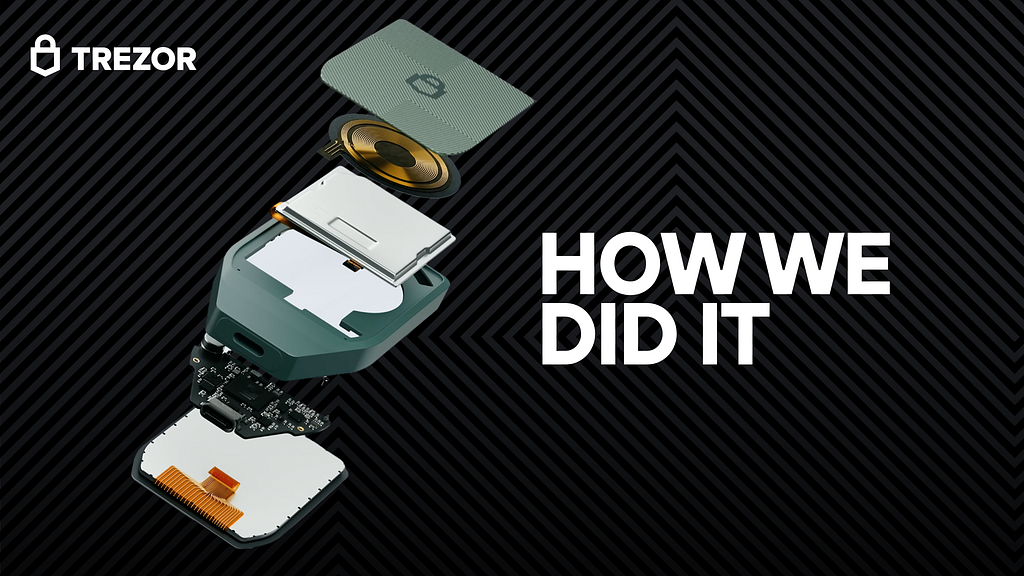
The most important security task of a hardware wallet relies on encryption. This includes verifying firmware, authenticating devices, and protecting the boot process. Trezor Safe 7 is ready to protect these operations with post-quantum algorithms. It is currently the only hardware wallet designed for this. For the quantum secure boot process, we use SLH-DSA-128, a signature scheme standardized by the National Institute of Standards and Technology (NIST) in 2024 and recognized by major cryptographic organizations around the world.
Every time you start Trezor Safe 7, this algorithm checks the bootloader to ensure that it has not been altered. We plan to expand this feature with firmware updates in the coming months as well.
Without this protection, future quantum computers could forge traditional digital signatures, forge bootloader updates, and trick users into installing malicious code that appears legitimate. Once the fake firmware is installed, transaction signatures can be manipulated, such as showing the correct recipient address on the screen but actually sending funds to the attacker’s address.
Trezor Safe 7 also includes a device certificate signed using the ML-DSA-44 algorithm, standardized by NIST in 2024 to verify the authenticity and integrity of the device. Once fully implemented in the firmware and Trezor Suite, this will provide an additional layer of quantum security, ensuring that devices can prove their authenticity even in the post-quantum era.
Not everything can be updated because post-quantum protection must be taken into account during the manufacturing process. The boardloader must have a public key corresponding to the bootloader, which must be factory installed and cannot be changed or updated. Likewise, the device certificate that authenticates your wallet is applied during creation and cannot be changed later.
Only hardware wallets that come from the factory with these provisions, such as the Trezor Safe 7, can be considered truly quantum-ready, providing reliable security even in the age of powerful quantum computers.
Secure the present and future

With Safe 7, Trezor keeps your devices safe, secure, and reliable even as quantum computing advances. It is the first hardware wallet to use post-quantum encryption, which is also currently used to secure global technology, communications, and internet infrastructure.
As Bitcoin and other blockchains also adopt post-quantum encryption standards, Trezor Safe 7 will be ready to provide users with full quantum protection.
No wallet today can make cryptocurrencies completely quantum-proof, but Trezor Safe 7 is built for that future. The only hardware wallet designed for the coming quantum era. Safe by design and prepared according to principle.
This is not panic, this is preparation. This is the first step toward a hardware wallet for the future industry.
If cryptocurrencies are to become the future of money, they must prepare for quantum computing.
After over 12 years of helping over 2 million users keep their cryptocurrencies safe, we think it’s better to be prepared and a little paranoid than not.
Stay secure.
Thomas Susanka
Chief Technology Officer at Trezor
Stay up to date with the Trezor newsletter
Want insider offers, product news, and cryptocurrency insights delivered to your inbox?
Sign up for our newsletter and receive the latest news!


What Quantum-Ready Crypto Security Means and Why It Matters was originally published on the Trezor Blog on Medium, and people are continuing the conversation by highlighting and responding to this story.