FIIs have tripled their stake in Sterlite Tech after a stellar 400% rise this year. Does your rally need more legs?
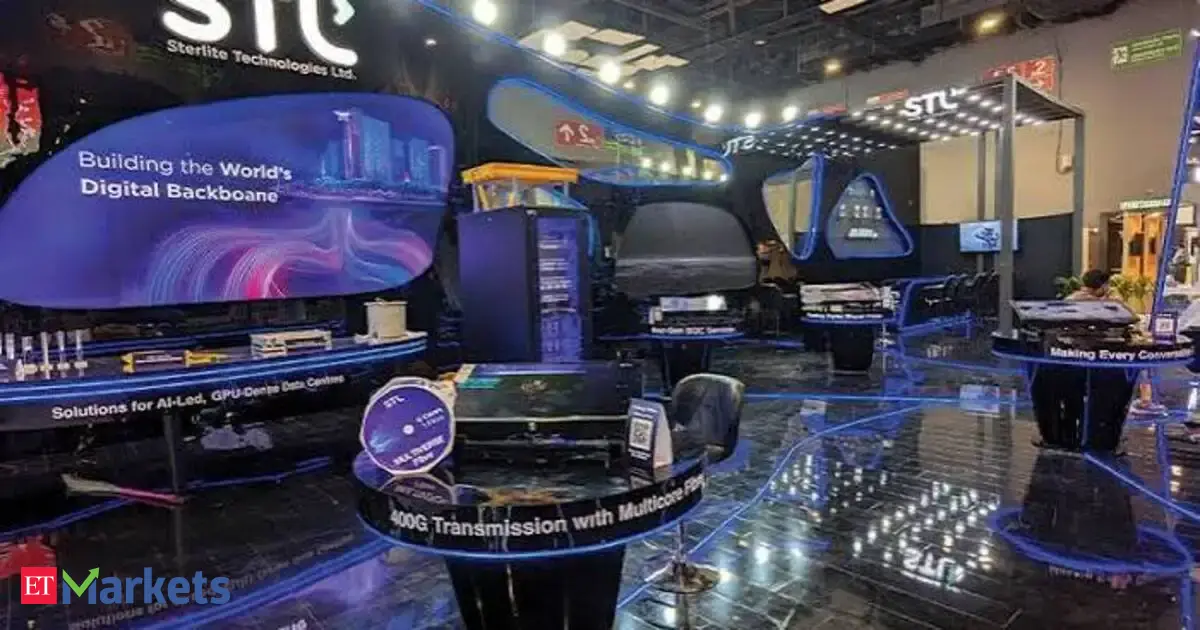
Fiber optic manufacturers have emerged as notable beneficiaries of this selective foreign interest. The stock soared 415% in 2026, and FIIs sharply increased their exposure, nearly tripling their stake from 6.7% in June 2025 to 19.7% as of July 1, 2026.
Foreign investors withdrew about $20 billion from India in FY26, but selling was not uniform across the market. Instead, international investors are becoming increasingly selective, with valuation playing a larger role in what they invest in.
Are there more legs to the Sterlite Tech stock rally?
On Monday, international brokerage CLSA upgraded the stock to Outperform and assigned a target price of Rs 950. This implies a 70% upside potential from current market levels. The brokerage said Sterlite Technologies’ order volume surged 155% QoQ to Rs 18,600 crore, indicating strong growth prospects.
Also read: Forget sales! FIIs are doubling down on this AI multibagger stock, which is up 200% YTD.
Taking into account the company’s recent QIP financing worth Rs 1,500 crore and its significant performance in the first quarter of FY27, CLSA has raised its forecasts for FY27-29 by 7-125 per cent. The brokerage now sees Sterlite Technologies achieving an EBITDA CAGR of 62%.

Sterlite Tech has signed a multi-year contract worth $1.11 billion, or over Rs 10,000 crore, to supply optical connectivity products for next-generation AI data centers. The company also received multiple hyperscaler orders worth more than $100 million for Neuralis, its integrated data center solutions portfolio. We have also won strategic orders to supply long-haul dark fiber high-density micro cables to major connectivity infrastructure providers.
Sterlite Tech Q1 Results
Sterlite Technologies reported its strongest quarterly performance in the first quarter of 2027, driven by increased demand for optical connectivity products, growth in its data center business, and record order books linked to AI-enabled digital infrastructure.
The company recorded revenue of Rs 1,910 crore for the quarter ended June 30, up 87 per cent from Rs 1,019 crore in the same quarter last year. Sequentially, revenue grew 33% from Rs 1,441 crore in Q4 2026. Profit after tax rose 870 per cent to Rs 197 crore from Rs 10 crore a year ago. In the March quarter, the company reported PAT of Rs 59 crore.
Read More: AI, Data Center Boom Could Make These 9 Stocks Rise Up to 477% in 2026 Can I still join the party?
EBITDA increased to Rs 39.7 billion compared to Rs 14 billion in the first quarter of 2026 and Rs 21.8 billion in the previous quarter. EBITDA margin was 20.8%, the highest in nearly 20 quarters, driven by better product mix, operating leverage and higher contribution from the data center business.
STL Managing Director Ankit Agarwal said the first quarter of 2027 was the strongest quarter in the company’s history, with record revenue and profitability reflecting the strength of its AI-enabled digital infrastructure portfolio and the confidence of hyperscalers and telcos.
He said the rapid expansion of its data center business shows how decisively STL has partnered in building AI infrastructure. With record order books and strong customer trust, the company expects to continue providing innovative and reliable solutions to support its customers’ growth.
data center boom
The surge in foreign ownership comes at a time when India’s data center industry is entering a multi-year expansion phase. Rapid digitalization, increasing cloud adoption, and increasing infrastructure demands from artificial intelligence are driving the demand for data centers and, consequently, the demand for fiber optic connectivity.
According to international brokerage Nomura, India’s data center IT load has increased from about 350 MW in 2019 to about 1.5-1.6 GW in 2025. This represents a CAGR of approximately 29%, much faster than the approximately 20% growth recorded globally.
(Disclaimer: Recommendations, suggestions, views and opinions provided by experts are their own. They do not represent the views of The Economic Times.)